2026 Opening Film Commission
FORM is grateful to commission interdisciplinary artist karmella benedito de barros to create an embodied, land-based short film that will play at the beginning of each film screening. karmella’s film offers audiences a moment to collectively pause, ground, and reflect; a means of deepening our understanding of the ways our bodies are interconnected with the lands we live and gather on.
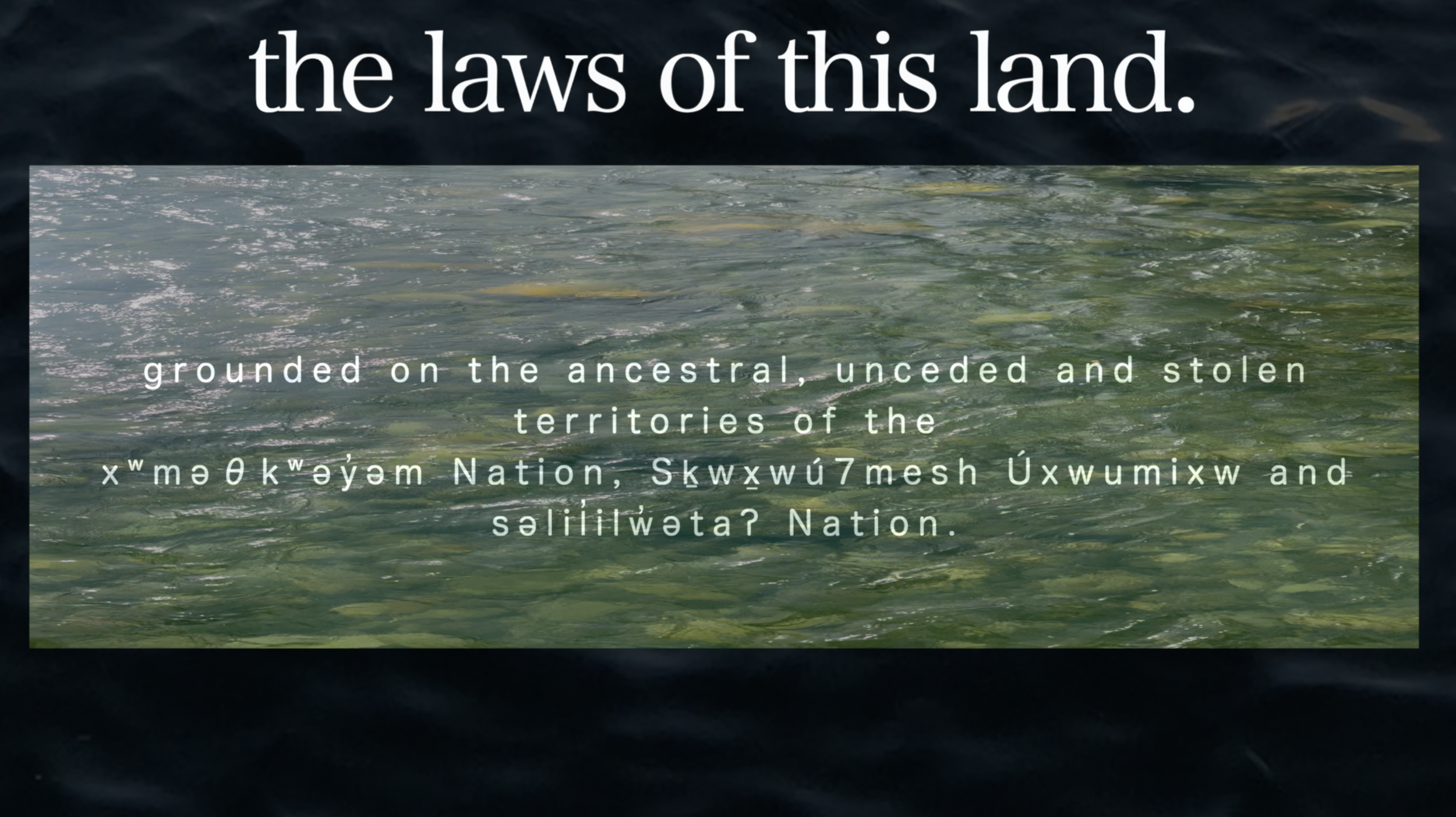
the laws of this land
by karmella benedito de barros
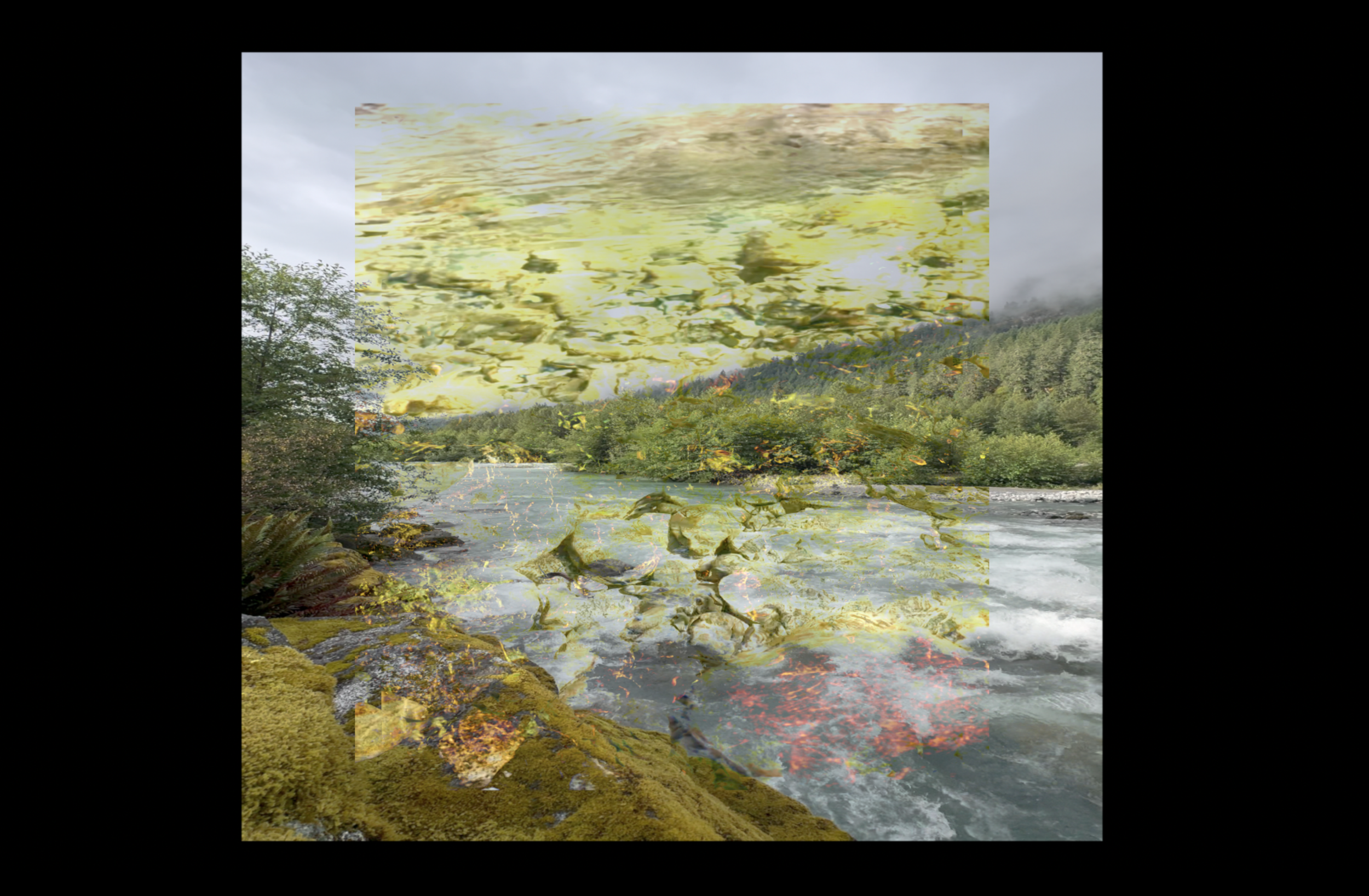
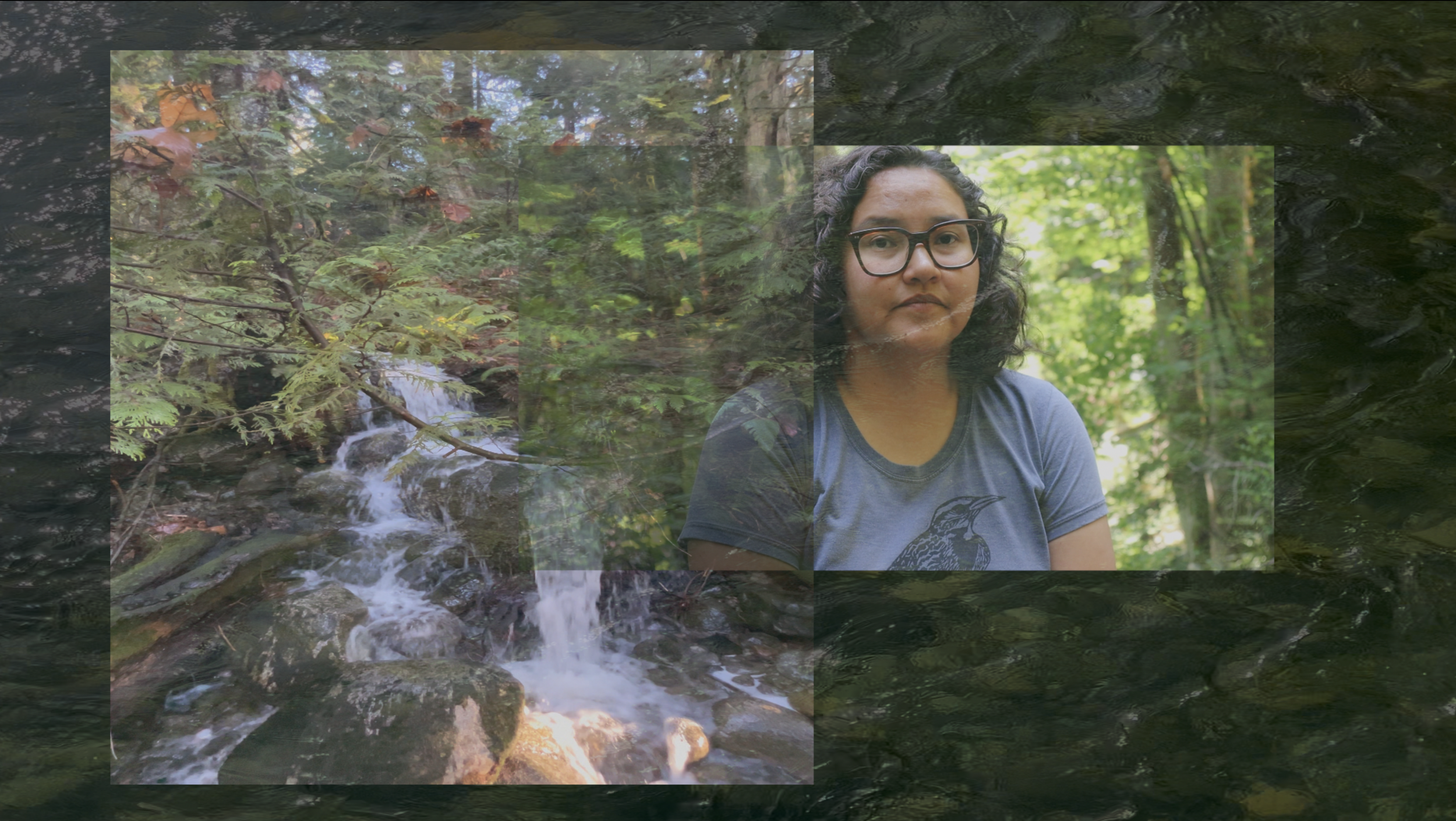
An explorative land acknowledgement, grounded as an experimental film collage and soundscape featuring storytelling by ŚW̱,XELOSELWET Tiffany Joseph of the Sḵx̱wu7mesh (Fresh Water people) and W̱ SÁNEĆ (Saltwater people, Emerging people). This piece takes place on the unceded territories of the Sḵwx̱wú7mesh, xʷməθkʷəy ̓əm, and səlil ̓ ilw ̓ ətaʔ peoples at Mahon park near the Capilano Reserve, where both Tiffany and karmella grew up ~ climbing trees and running by the creek.
Full Transcript:
Ha7lh skwayl tanuyap. U siyaḿ. ŚW̱,XELOSELWET kwi en sna. Tina7 chen tl’a Sḵwx̱wú7mesh Uxwumixw. Tina7 chen tl’a Xwemelch’stn Uxwumixw. I ĆSE LÁ,E SEN EṮ W̱SÁNEĆ. I Tun’ni’ tsun ‘utl’ Quw’utsun.
My name is Tiffany Joseph. I am here in Squamish, my ancestral homelands. I'm from Xwemelch’stn Uxwumixw. which is the Capilano Reserve, um, in Squamish Nation homelands. I'm from the Joseph family here and I'm also, W̱SÁNEĆ and Quw’utsun through my mother, and her mother. I was born and raised in Sḵwx̱wú7mesh. And, uh, my grandmother, late Yvonne Joseph, whose maiden name was Paull with two L's. She was a fluent Sḵwx̱wú7mesh Snichim speaker. She was my preschool teacher. And she taught me everything I know about love and belonging and how to do things in a good way.
~
Creeks are so important. Uh, for Squamish people, creeks and rivers. We’re fresh water people. Um, so the glacial melts, you know, that's a big, big contributor to our identity as Squamish people. Um, all the rivers, they really cleanse us. They're meant to cleanse our spirits. Our bodies keep us strong and healthy.
When I think about the fresh water and why it's so important, the moving water, cleansing our body, being able to take away any bad energy that we wash off of ourselves, that's what makes Squamish people strong. That's what made us what in this English speaking world would call us as holy. You know, we were meant to live as holy beings. But you can think, change that word a bit to whole-ly, holy, to be whole, to have negativity cleared from you and that you love yourself so much that you will always take care of your mind, body and spirit, and not only because you love yourself, because you'd never want to hurt the land. Those are the ways of being, for Squamish people. And I'm so glad that this land shaped me. Shaped my mind, my body, my spirit, my character.
We are people who believe in responsibilities. We don't have a right to this land. We don't own the title to this land. We are responsible for this land, for this territory, for these waters, because we are given the instructions from the Xaays, the creators of these territories, on how to look after it. The laws were meant to obey and what it looks like when we disobey, when we break those laws.
To be Sḵwx̱wú7mesh to me is to want to lift up others Sḵwx̱wú7mesh people is to want to build friendship and relationship with people who want to look after this place, who respect these lands and these waters the way that we do, or at the very least, want to know what the right thing to do is, and also what the wrong thing is, and to not cause harm, you know? And so when I was growing up territory acknowledgements were not new to me ever. There was no point in my life where a territory acknowledgement was new to me. It's all I've known because it is Sḵwx̱wú7mesh people, and I'm sure our neighbours too, who brought out the term territory acknowledgements. It comes from a time before colonization, when people would have to ask for permission to come ashore. You would state who you are, who your family is, and your intention of coming to the land and asking from the water, may I please come ashore?
When Squamish people and all the other nations were saying unceded, they were saying, we never signed a treaty. So when we were saying, hey, we never welcomed you here because they would ask these, these settlers would ask, oh, can you come do a performance and welcome people to your territory? – They said, we never invited you here. So no, we can't welcome you to the territory. We never agreed for you to ever even be here to live, work and play and destroy and dismantle our way of life. We did not allow that. So, no, we can't welcome you to our territory. We will acknowledge that this is Sḵwx̱wú7mesh Uxwumixw. We will acknowledge that this is unceded land. We will acknowledge that it's stolen, and we will acknowledge the history of how you went about this.
And, um, you know. It's changed, since it stopped being just our people, since it stopped just being our leaders who carried out those territory acknowledgements. And I'm not saying it's good or bad, but it's important to know the origins because it was Sḵwx̱wú7mesh people refusing to be tokens. It was Sḵwx̱wú7mesh people refusing to be paraded around like a sideshow and asserting being viewed with dignity.
When I think about who I am and who I was raised to be. And, um, what decolonizing means, I think it means that people must learn from this land and remember that kindness and generosity are very, very important. So if you're living your life in a way that is informed by greed and consumption, then you are breaking the laws of this land. And how can you decolonize and become kind and generous? Those are just two very simple… There's huge, much bigger ideas that we can talk about. We can get into the nitty gritty things of, you know, abuse, assault, violence, theft. We can get into all that. But can you get just to the bare bones of kindness and generosity? First? And also, can you hold yourself accountable?